THE 50-40-10 HAPPINESS RULE
Choose the way you want to explore the topic (podcast or article):


Podcast
LISTEN ALSO ON:

What is the 50-40-10 Happiness Rule?
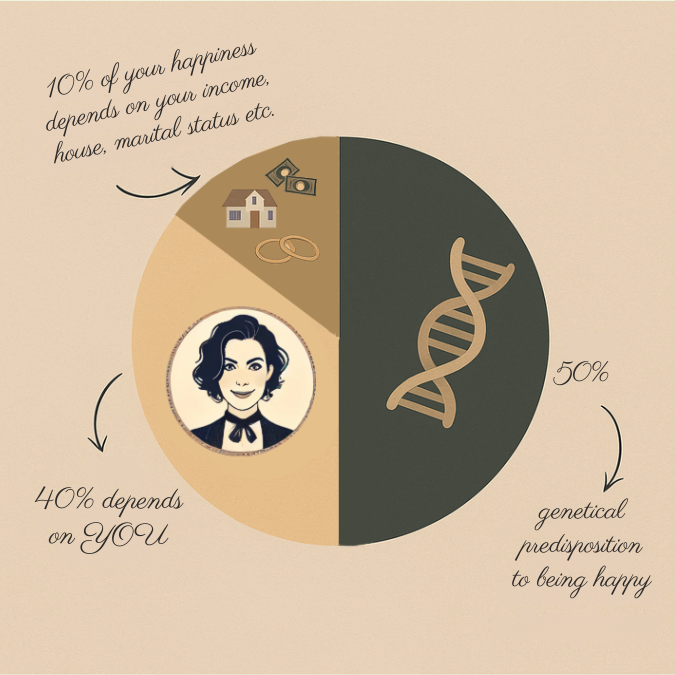
Let’s delve into a fascinating concept from the book “The How of Happiness” by Dr. Sonja Lyubomirsky. Within the pages of this insightful work lies the notion of the 50-40-10 happiness rule—a framework that sheds light on the components of our happiness. According to this theory, 50% of our happiness is predetermined by our genetics, often referred to as our “set points.” A further 10% is attributed to our circumstances—factors such as income, living situation, career, and relationship status. Remarkably, the remaining 40% is influenced by our internal state of mind—the thoughts and actions that shape our daily experiences.
How can the rule benefit us?
While it’s important to note that the 50-40-10 rule is still theoretical, its implications are profound. Drawing from insights shared by prominent psychologists like Martin Seligman, it’s plausible to assert that we possess more agency over our happiness than we might realize. Our mindset plays a pivotal role in how we perceive and respond to life’s circumstances.
Rainfall example
Consider the simple example of rainfall: Some individuals greet it with anticipation, relishing the opportunity to listen to its soothing rhythm, while others approach it with frustration, lamenting the inconvenience of getting wet. Despite facing the same external reality, their divergent reactions highlight the significant impact of mindset on mood and outlook.

In contemplating the 50-40-10 happiness rule, we are prompted to reflect on our own internal narratives and attitudes. Could fostering a positive mindset lead to greater fulfillment and contentment in life? It’s a notion worth pondering.
What can lead us astray?

Dr. Lyubomirsky emphasizes the importance of recognizing factors that can divert us from happiness, especially considering that 40% of our well-being is within our control. One such factor is social comparison—a tendency that often leads us astray.
Take, for example, the common scenario of socializing with peers whose income levels are similar to ours. When they express desires for greater wealth or success, we may find ourselves caught in a cycle of comparison, measuring our own achievements against theirs. This habit of comparing can swiftly diminish our satisfaction and breed feelings of inadequacy.
Yet, it’s crucial to recognize that we have the power to break free from this cycle. We can choose to cease comparing ourselves to others and instead focus on our individual journey towards fulfillment.
More info about the 50-40-10 happiness rule
If you’re intrigued to delve deeper into this concept, I recommend exploring the following video and delving into Dr. Lyubomirsky’s book for further insights.
THE VIDEO
THE BOOK
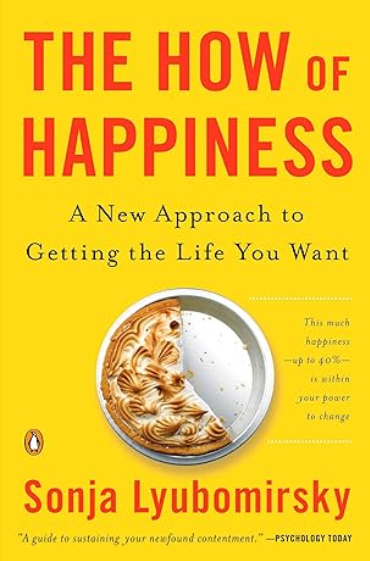
You can buy the book here: LINK
Thank you for visiting HOW TO DEAL WITH!

Get back to HOME PAGE
Go to TOPIC MAP